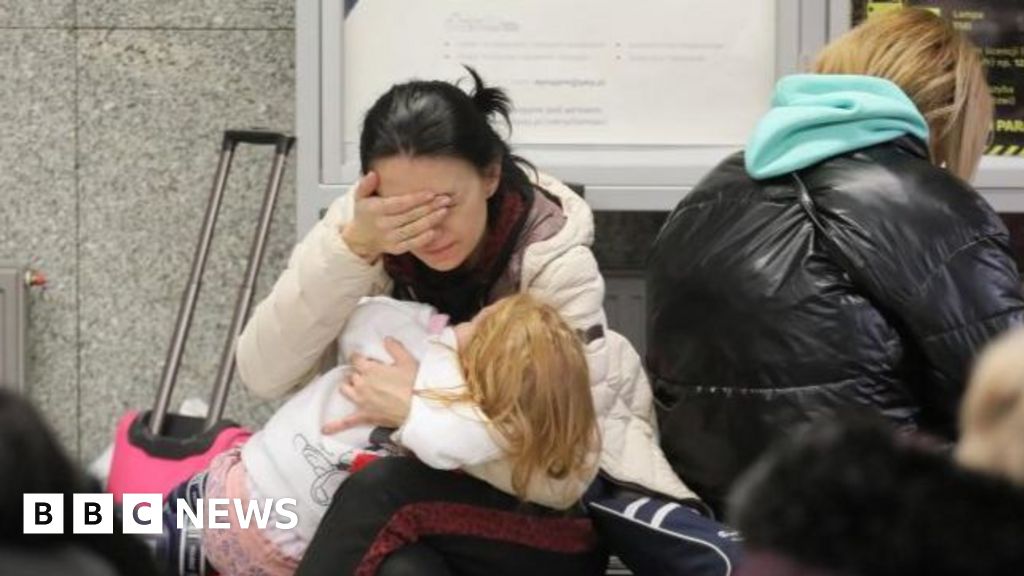

According to EPA, approximately 2.5 million Ukrainians reside in Poland, accounting for almost 7% of the country’s total population. Svitlana, a 31-year-old Ukrainian mother, shared that her daughter initially enjoyed attending school in Poland and was reluctant to switch schools even after relocating. However, she recently faced discrimination at school, with one classmate telling her to “go back to Ukraine.” This incident is part of a larger trend of rising anti-Ukrainian sentiment in Poland, with many Ukrainians reporting abuse on public transport, bullying in schools, and xenophobic content online.
The situation has escalated to the point where Svitlana’s daughter was mocked at school for speaking Ukrainian, with classmates pretending to be hit by a missile and laughing at her. This incident occurred shortly after a Russian missile struck Svitlana’s hometown in Ukraine, causing significant trauma to her daughter. Svitlana, who fears reprisals, has raised concerns with school staff about her daughter’s mistreatment but has noticed a general shift in attitudes towards Ukrainians in various settings.
Despite an initial outpouring of support for Ukrainian refugees in Poland, recent months have seen a surge in anti-Ukrainian sentiment, both online and in real life. Natalia Panchenko, an activist from the ‘Stand with Ukraine’ Foundation, highlighted instances of xenophobic abuse targeting individuals with Ukrainian accents, particularly women and children who have fled the war in Ukraine. Public opinion towards Ukrainian refugees has also soured, with a decline in support for accepting them in Poland.
The issue of Ukraine has become a central theme in Poland’s presidential election campaign, with candidates adopting varying positions on the conflict. While some candidates express strong anti-Ukrainian views, others, like front-runner Rafal Trzaskowski, have tempered their pro-Ukrainian stance to appeal to a broader electorate. However, the spread of disinformation and propaganda, allegedly orchestrated by Russia, has fueled negative sentiments towards Ukrainians in Poland, leading to an increase in anti-Ukraine rhetoric and actions. EPA
“Tapi kita baru akan melihat efeknya setelah pemilihan – berapa persen orang Polandia yang ingin memilih kandidat yang terbuka pro-Rusia.”