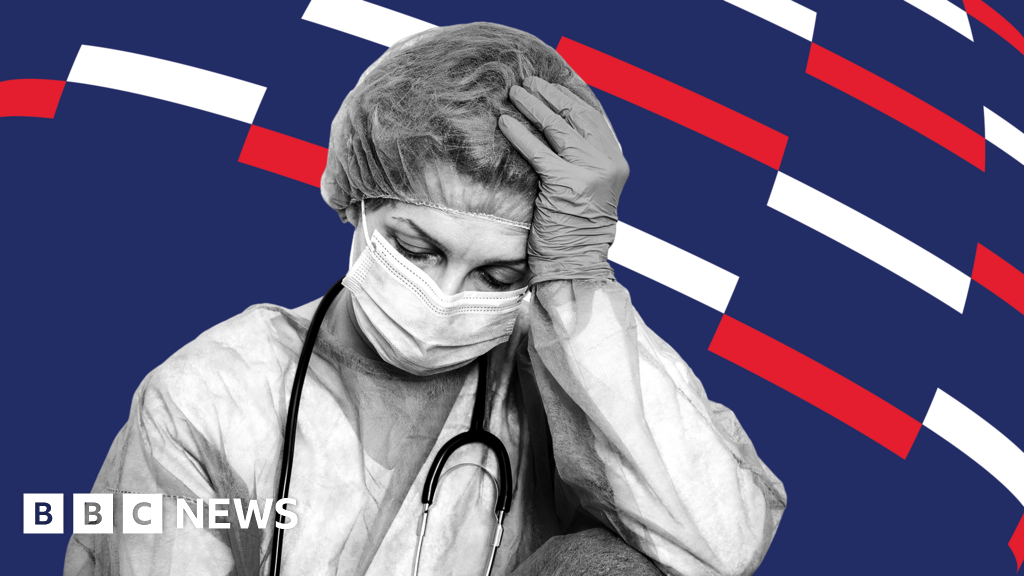

Reporting from Streaky Bay, South Australia, Tiffanie Turnbull for BBC shares the story of Dr. Victoria Bradley, the sole doctor in the idyllic beach town of Streaky Bay. Despite the picturesque setting, Dr. Bradley’s life as the town’s only doctor was anything but easy. Constantly on call, running the hospital and GP clinic, she eventually burnt out and quit, leaving the town’s healthcare system in disarray.
Streaky Bay’s healthcare crisis reflects a national issue of inadequate funding and a shortage of critical healthcare workers. Wait times are increasing, fees are rising, and patients are struggling to access the care they need. As Australia approaches its election, healthcare has become a central issue, with promises of increased funding from both major parties. However, experts argue that band-aid fixes are not enough, and sweeping reforms are needed to save the crumbling healthcare system.
Renee Elliott’s story highlights the challenges faced by rural patients like her in accessing life-saving care. The once-revered universal healthcare system, established four decades ago, is now struggling to provide affordable and accessible care. The core of the crisis lies in GP services, where rising costs, staff shortages, and inadequate funding are driving up prices and leaving many Australians unable to afford necessary medical care.
With patients like Callum Bailey choosing to suffer in silence rather than seek medical help due to the high costs, the need for reform is clear. As the nation grapples with the future of its healthcare system, the question remains: is universal healthcare worth saving? Tiffanie Turnbull reports from Streaky Bay, South Australia for BBC. In the entire state of Tasmania, for example, they couldn’t find a single one. The results resonate with many Australians, he says: “It really brought it home to them that, ‘Okay, it’s not just us. This is happening nationwide’. And that’s just primary care. Public specialists are so rare and so overwhelmed – with wait times often far beyond safe levels – that most patients are funneled toward exorbitantly expensive private care. The same goes for a lot of non-emergency hospital treatments or dental work. There are currently no caps on how much private specialists, dentists or hospitals can charge and neither private health insurance nor slim Medicare rebates reliably offer substantial relief.
The BBC spoke to people across the country who say the increasing cost of healthcare had left them relying on charities for food, avoiding dental care for almost a decade, or emptying their retirement savings to fund treatment. Others are borrowing from their parents, taking out pay-day loans to buy medication, remortgaging their houses, or selling their possessions. Kimberley Grima regularly lies awake at night, calculating which of her three children – who, like her, all have chronic illnesses – can see their specialists. Her own overdue health checks and tests are barely an afterthought. “They’re decisions that you really don’t want to have to make,” the Aboriginal woman from New South Wales tells the BBC. “But when push comes to shove and you haven’t got the money… you’ve got no other option. It’s heart-breaking.” Another woman tells the BBC that had she been able to afford timely appointments, her multiple sclerosis, a degenerative neurological disease, would have been identified, and slowed, quicker. “I was so disabled by the time I got a diagnosis,” she says. The people missing out tend to be the ones who need it the most, experts say. “We have much more care in healthier, wealthier parts of Australia than in poorer, sicker parts of Australia,” Peter Breadon, from the Grattan Institute think tank says. All of this creates a vicious cycle which feeds even more pressure back into an overwhelmed system, while entrenching disadvantage and fueling distrust. Every single one of those issues is more acute in the regions. Streaky Bay has long farewelled the concept of affordable healthcare, fighting instead to preserve access to any at all. It’s why Dr Bradley lasted only three months after quitting before “guilt” drove her back to the practice. “There’s a connection that goes beyond just being the GP… You are part of the community. “I felt that I’d let [them] down. Which was why I couldn’t just let go.” Dr Bradley in her office overlooking the bay – what she calls the “most beautiful practice” in Australia. She came back to a far more sustainable three-day week in the GP clinic, with Streaky Bay forced to wage a bidding war with other desperate regions for pricey, fly-in-fly-out doctors to fill in the gaps. It’s yet another line on the tab for a town which has already invested so much of its own money into propping up a healthcare system supposed to be funded by state and private investment. “We don’t want a gold service, but what we want is an equitable service,” says Penny Williams, who helps run the community body which owns the GP practice. When the clinic was on the verge of closure, the town desperately rallied to buy it. When it was struggling again, the local council diverted funding from other areas to top up its coffers. And even still most standard patients – unless they are seniors or children – fork out about A$50 per appointment. It means locals are paying for their care three times over, Ms Williams says: through their Medicare taxes, council rates, and then out-of-pocket gap fees. “No-one would say this is the Australia that we want, surely,” Elizabeth Deveny, from the Consumers Health Forum of Australia, tells the BBC. Like many wealthy countries, the nation is struggling to cope with a growing population which is, on average, getting older and sicker. There’s a small but increasing cohort which says it is time to let go of the notion of universal healthcare, as we’ve known it. Many doctors, a handful of economists, and some conservative politicians have sought to redefine Medicare as a “safety net” for the nation’s most vulnerable rather than as a scheme for all. Health economist Yuting Zhang argues free healthcare and universal healthcare are different things. The taxes the government collects for Medicare are already nowhere near enough to support the system, she says, and the country either needs to have some tough conversations about how it will find additional funds, or accept reasonable fees for those who can afford them. “There’s always a trade-off… You have limited resources, you have to think about how to use them effectively and efficiently.” Access to healthcare has emerged as a key issue ahead of the May 3 election The original promise of Medicare has been “undermined by decades of neglect”, the Australian Medical Association’s Danielle McMullen says, and most Australians now accept they need to contribute to their own care. She says freezes to Medicare rebates – which were overseen by both parties between 2013 and 2017 and meant the payments didn’t even keep up with inflation – were the last straw. Since then, many doctors have been dipping into their own pockets to help those in need. Both the Labor Party and the Liberal-National coalition accept there is a crisis, but blame each other for it. Opposition leader Peter Dutton says his government will invest A$9bn in health, including funds for extra subsided mental health appointments and for regional universities training key workers. “Health has become another victim of Labor’s cost of living crisis… Tiffanie TurnbullMelaporkan dariStreaky Bay, South AustraliaBBC kita tahu belum pernah lebih sulit atau mahal untuk bertemu dokter umum daripada sekarang,” juru bicara kesehatan Anne Ruston mengatakan kepada BBC dalam sebuah pernyataan.
Di sisi lain, Albanese – mengeluarkan kartu Medicare-nya hampir setiap hari – telah berusaha mengingatkan pemilih bahwa Partai Buruh menciptakan sistem yang dicintai, sambil menyoroti dukungan campuran sebelumnya dari Koalisi terhadap skema universal dan pemotongan belanja yang diusulkan Dutton saat Menkes sepuluh tahun lalu.
“Pada pemilu ini, kartu kecil di sini, kartu Medicare Anda, yang dipertaruhkan,” kata Albanese.
Pemerintahannya telah mulai memperbaiki hal-hal, katanya, dan telah berjanji tambahan A$8.5miliar untuk pelatihan lebih banyak dokter umum, membangun klinik publik tambahan, dan mensubsidi lebih banyak obat.
ABC News/Billy Cooper
Pemerintah berencana membuka lebih banyak klinik perawatan mendesak untuk membantu mengurangi tekanan
Tetapi judul paket penyelamatan mereka adalah peningkatan rebat Medicare dan bonus lebih besar untuk dokter yang membukukan dalam jumlah besar.
Diusulkan oleh Partai Buruh, kemudian disamakan oleh Koalisi, perubahan tersebut akan membuat 9 dari 10 Australia dapat bertemu dokter umum secara gratis, klaim kedua partai.
Seorang dokter di Tasmania mengatakan kepada BBC itu hanya “bait suara pemilu yang bagus”. Dia dan banyak klinisi lain mengatakan uang tambahan masih belum cukup, terutama untuk konsultasi yang lebih lama yang semakin banyak pasien minta untuk masalah kompleks.
Partai Buruh memiliki sedikit kesabaran untuk kritik-kritik tersebut, mengutip penelitian yang mereka klaim menunjukkan proposal mereka akan membuat sebagian besar dokter lebih baik dan menuduh mereka menginginkan investasi “tanpa ikatan”.
Tetapi banyak pasien yang diwawancarai oleh BBC skeptis terhadap proposisi kedua partai akan membuat perbedaan besar.
Ada banyak hal yang perlu mereka lakukan, kata mereka, meminta daftar keinginan: lebih banyak pekerjaan dalam pelatihan dan mempertahankan dokter di daerah pedesaan; regulasi efektif atas biaya privat dan lebih banyak investasi dalam klinik spesialis publik; penagihan masal universal anak-anak untuk semua biaya medis dan gigi; lebih banyak pendanaan untuk kesehatan terkait dan pencegahan.
Getty Images
Di kota-kota terpencil seperti Streaky Bay, orang bertanya-tanya apakah kerusakan terhadap perawatan kesehatan universal sudah tidak bisa diperbaiki lagi
Ahli seperti Bapak Breadon mengatakan, di atas segalanya, cara Medicare membayar klinisi perlu direformasi secara menyeluruh untuk menjaga akses kesehatan benar-benar universal.
Itu adalah, pemerintah perlu berhenti membayar dokter sejumlah tetap per janji temu, dan memberi mereka anggaran berdasarkan seberapa besar dan sakit populasi yang mereka layani – itu adalah sesuatu yang beberapa tinjauan terbaru katakan.
Dan semakin lama pemerintah menunggu untuk berinvestasi dalam reformasi ini, semakin mahal biayanya.
“Bintang-bintang mungkin sedang bersinar sekarang… Sudah waktunya untuk perubahan ini, dan menunda mereka akan sangat berbahaya,” kata Bapak Breadon.
Namun di Streaky Bay, penduduk seperti Ibu Williams bertanya-tanya apakah sudah terlambat. Hal-hal sudah berbahaya di sini. Cynic dalam diri saya, katanya, menggelengkan kepala.
Definisi dari universal adalah semua orang mendapatkan hal yang sama, tetapi kita tahu itu tidak benar sudah.
Lebih lanjut tentang pemilu Australia 2025″ Reporting from Streaky Bay, South Australia, this is Tiffanie Turnbull for the BBC.