
Katya Adler
Europe editor
Reporting from Northern Norway and Svalbard
BBC
As soon as Magnus Mæland became mayor of a small town on Norway’s northern tip in late 2023, three delegations from China came knocking on his door.
“It’s because they want to be a polar superpower,” he tells me.
China might not instinctively spring to mind when you think about the Arctic – but it’s determined to be a big Arctic player. It’s been vying to buy real estate, get involved in infrastructure projects, and hopes to establish a permanent regional presence.
China already describes itself as a “near-Arctic state”, even though its northernmost regional capital Harbin is on roughly the same latitude as Venice, Italy.
But the Arctic is fast becoming one of the most hotly-contested parts of the world. Beijing faces stiff competition from Russia, China, Europe, India, and the US.
The race for the Arctic is on.
Climate scientists say the Arctic is warming four times faster than anywhere else. This impacts ecosystems, wildlife, and local populations. The Arctic is enormous, encompassing 4% of the globe.
But global powers see a new world of opportunities opening up in the Arctic on the back of environmental changes.
The melting ice in the Arctic makes it easier to access the region’s incredible natural resources – critical minerals, oil, and gas – around 30% of untapped natural gas is said to be found in the Arctic.
And it’s opening up possibilities for new maritime trade routes, drastically reducing travel time between Asia and Europe. In the export business, time is money.
Kirkenes hopes to be the first European stop for Chinese cargo ships in the future, but is wary of allowing Beijing too much influence in the port.
When I visit, the port of Kirkenes looks pretty ghostly.
Inside the Arctic Circle, at the northernmost point of mainland Norway, the former mining town is a gritty contrast with the picture-postcard, snow-covered mountains and fjords that surround it.
There are shuttered shops and abandoned warehouses, riddled with broken windows. The town feels forgotten and left behind.
So you can imagine the appeal of the possibility of becoming the first European port of call for masses of container ships from Asia, depending on how fast the polar ice continues to melt.
The town’s port director, Terje Jørgensen, plans to build a brand new international port. His eyes light up when he talks about becoming the Singapore of Europe’s High North.
“What we’re trying to build here in Kirkenes is a trans-shipment port where three continents meet: North America, Europe, and Asia. We’ll take the goods ashore and reload onto other vessels [for further export]. We don’t need to sell any land to anyone. Not to a UK company, not a Chinese company.
New laws in Norway prohibit the transfer of property or businesses if the sale could harm “Norwegian security interests,” he says. What they’re waiting for, he adds, are clear guidelines from the government about what kind of critical infrastructure this might cover.
Mayor Mæland certainly seems wary of China’s intentions. “We want a relationship with China, but we don’t want to be dependent on China,” he tells me.
“Europe has to ask itself ‘How dependent do you want to be on totalitarian and authoritarian regimes?'”
China’s purchase-your-way-into-the-Arctic approach is beginning to be rejected across the European Arctic. Recent attempts by Beijing to buy into seaports in Norway and Sweden and an airport in Greenland, for example, were rebuffed.
This is pushing polar-hungry China – the biggest emerging superpower in the world – into the arms of the Arctic’s largest player, Russia.
The border town of Kirkenes has felt the economic impact of the war in Ukraine, with Russian visitors disappearing and cross-border trade almost gone.
Russia controls a whopping half of the Arctic shoreline – and it’s been hoovering up Chinese investments.
The two countries cooperate militarily in the Arctic too. China’s coastguard entered the Arctic for the first time in October, in a joint patrol with Russian forces. The two countries had staged joint military exercises here the month earlier. In July, long-range bombers from both countries provocatively patrolled the Arctic Ocean near Alaska in the United States.
It’s as if Beijing and Moscow are looking over at Nato, which has stepped up its exercises in the Arctic, and are saying: We can do this too.
Every country bordering the Arctic is a member of Nato except Russia. Finland and Sweden joined after the full-scale invasion of Ukraine.
Andreas Østhagen, a senior fellow at the independent Fridtjof Nansen Institute, describes the Arctic as “low-hanging fruit” for Russian-Chinese collaboration.
“Russia needs investments and commercial actors who are interested in developing the Arctic – LNG [liquefied natural gas] resources, oil resources, or developing a northern sea route as a shipping lane.
“China is that market. The two countries are looking for ways to expand their political, economic, even military cooperation.”
But China is keen not to align itself too closely with Russia. It wants to avoid Western sanctions and to continue doing business with Western powers, inside and outside the Arctic.
Russia has reservations too.
“Be careful not to overrate the Russia-China relationship,” says Mr Østhagen. “Russia remains wary of letting China too deep into its Arctic.”
Moscow relies heavily on its natural resources there. And it’s courting other Arctic investors too, including the US, according to reports.
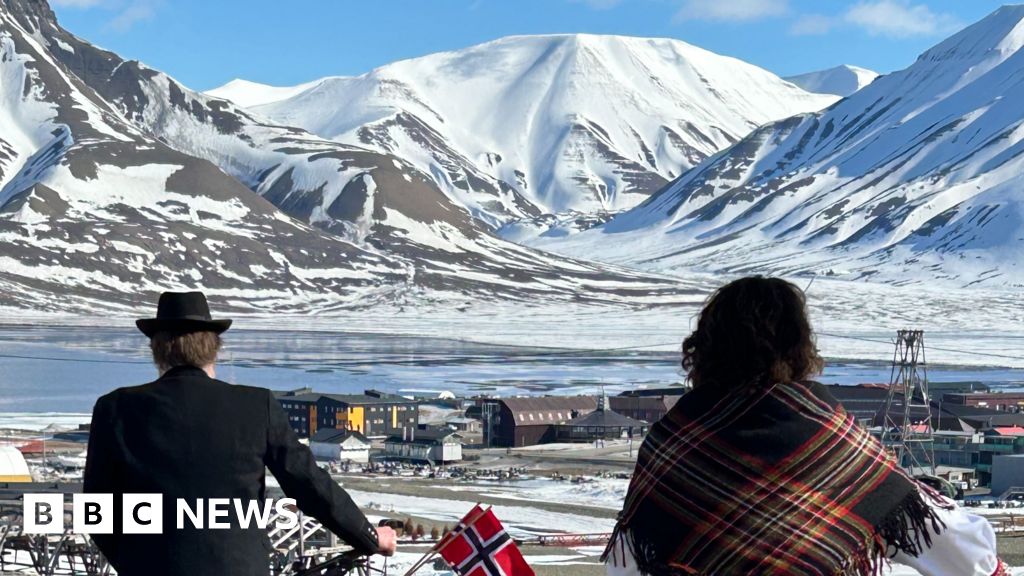
The view across the Pasvik River to Russia, marked by a yellow border post on the largely unguarded Norwegian side Katya Adler and the Kola Peninsula seem uncomfortably close. During the Cold War, the town was known as a hub of espionage, serving as a battleground between the West and the Soviet Union. Norway suspects Russia of using the Arctic region for training new fighters and launching attacks on Ukraine. While not engaged in direct conflict with Russia, Norway, particularly its northern region along the 200km border with Russia, feels threatened. Increased incidents of GPS jamming and espionage near the border have heightened tensions. Norway, along with its NATO allies, remains vigilant against Russian activities in the Arctic, monitoring suspicious vessels and potential threats to critical infrastructure. Russia’s military presence in the region poses a threat to Europe and the US. Despite efforts to maintain communication with Russia, tensions remain high in the Arctic as global conflicts escalate. The scramble for Arctic resources has led to nationalist displays and suspicions of espionage in places like Svalbard. The Arctic region is a focal point for global powers, with concerns over military activities and intelligence-gathering intensifying. Katya Adler Mungkin aku membayangkan, tapi di antara semua keceriaan, rasanya ada perasaan lain yang tidak terucapkan pada hari itu, sebuah pengingat: ‘Svalbard milik kita!’
Mood persaingan nasional di Arktik tidak tanpa konsekuensi.
Orang-orang di Svalbard merayakan hari nasional Norwegia dengan pakaian nasional negara itu
Svalbard berada di tengah-tengah persaingan antara kekuatan global untuk sumber daya Arktik
Komunitas pribumi di wilayah itu, lebih dari setengahnya tinggal di Arktik Rusia, sering merasa bahwa ada kegagalan dari pihak yang berkuasa untuk mengakui hak-hak orang-orang yang telah lama tinggal di wilayah tersebut.
Miyuki Daorana, seorang aktivis muda dari Greenland yang mewakili komunitas pribumi Inughuit, mengatakan ketika Donald Trump mengklaim dia ingin membeli negara itu selama kepresidenan pertamanya, mereka tertawa. Tapi kali ini terasa berbeda, katanya.
“Karena situasi politik global saat ini, dengan permainan kekuasaan dan persaingan untuk sumber daya, itu jauh lebih serius.”
Dia, dan yang lainnya di komunitas pribumi, menuduh negara-negara Eropa menggunakan “krisis iklim” sebagai alasan untuk “mengambil dan menyerbu tanah pribumi”.
“Ini sesuatu yang kami sebut kolonialisme hijau atau agresi pengembangan di mana mereka benar-benar ingin mengambil lebih banyak dari tanah,” katanya.
“[Arktik] bukan hanya topik bagi kami. Itu bukan hanya minat, itu bukan studi. Itu benar-benar kehidupan dan perjuangan nyata dan emosi dan ketidakadilan yang sangat tidak adil.
“Pemerintah dan para politisi, mereka seharusnya bekerja untuk rakyat. Tapi saya belum melihat itu. Itu sebagian besar kata-kata diplomatis.”
Tidak lama yang lalu, dulu kamu biasa mendengar tentang eksklusivitas Arktik, di mana delapan negara yang berbatasan dengan Arktik – Kanada, Rusia, AS, Finlandia, Swedia, Norwegia, Denmark, dan Islandia – bersama perwakilan dari enam komunitas pribumi Arktik dan negara-negara pengamat lainnya, termasuk China dan Inggris, akan mengesampingkan perbedaan politik untuk bekerja sama melindungi dan mengatur bagian dunia ini yang luar biasa.
Tapi saat ini adalah saat-saat politik kekuasaan besar. Negara-negara semakin bertindak demi kepentingan mereka sendiri.
Dengan begitu banyak negara saingan sekarang berada di Arktik, risiko salah tafsir atau kesalahan perhitungan tinggi.
“